Explore symptoms, assessment and rehabilitation considerations for neck pain.
Waking with a stiff neck can make turning your head or getting ready for work uncomfortable. Sleep position may contribute, but it does not explain every episode. This guide covers gentle movement, pillow positioning and symptoms that need a medical assessment.
When neck pain needs medical attention
Seek emergency care after a major neck injury or for neck pain with sudden neurological symptoms such as double vision, trouble speaking or swallowing, or new weakness in your face or limbs. The Chelsea and Westminster Hospital neck pain leaflet explains when emergency assessment is needed.
Arrange medical advice if pain is affecting sleep or everyday activity, is not settling, or comes with arm tingling, numbness or other new symptoms. Do not drive or cycle if restricted neck movement makes it unsafe.
Why you might wake up with neck pain
An awkward position during sleep can leave the neck stiff. Staying in one position for long periods during the day may also contribute. Other causes, including injury or nerve irritation, need a different assessment.
A sudden painful tilt of the head is sometimes called torticollis or wry neck. It can occur on waking, but persistent or unusual symptoms should be checked rather than attributed automatically to a pillow.
Gentle neck movements to discuss with a physiotherapist
Begin with comfortable movement rather than a forceful stretch. A healthcare professional can advise whether these examples fit your symptoms and how much to do. Stop and seek advice if exercise worsens your pain.
Comfortable neck rotation
Sit upright with your shoulders relaxed. Slowly turn your head to one side within a comfortable range, return to the centre, then try the other side. The NHS flexibility guide illustrates this movement.
Small chin nod
Sitting comfortably, make a small nod with your head, then relax back to the starting position. Avoid turning this into a large movement of your whole neck. The Chartered Society of Physiotherapy demonstrations show this and other neck movements.
Gentle side bend
Slowly bring one ear towards the shoulder without lifting that shoulder. Return to the centre and try the other side. Keep it gentle and avoid pulling your head further with your hand.
Pillow position and daily habits
The NHS neck pain guidance recommends supporting your head at a similar height to the rest of your body during sleep and avoiding sleeping on your front. A low, firm pillow may help; the aim is a comfortable supported position.
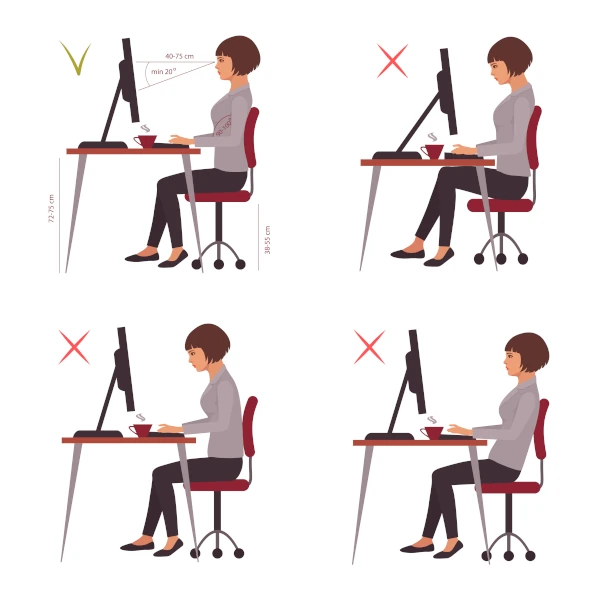
During the day, change position regularly instead of keeping your neck still for long periods. Heat or cold packs may offer short-term comfort; wrap them in a towel rather than placing them directly on your skin. Avoid a neck collar unless a doctor has advised one.
Planning physiotherapy for recurring morning stiffness
Describe when the pain starts, which movements are difficult and whether symptoms travel into the arm. Bring questions about your sleep setup and work routine. Assessment helps determine whether gentle movement, strengthening or further medical care is appropriate.
Our neck and shoulder physiotherapy guide explains consultation preparation and the limitations of a remote assessment. A video session can discuss movement and exercises, while some symptoms need an examination in person.
Frequently asked questions about morning neck pain
Is my pillow definitely the cause?
No. Sleep position is one possible contributor. Repeated pain, arm symptoms or significant movement restriction should be assessed.
Should I keep my neck completely still?
Gentle movement is usually encouraged for uncomplicated neck pain. Follow individual instructions after an injury or if a clinician has advised restrictions.
How quickly should I expect improvement?
Improvement varies with the cause and circumstances. Seek medical advice if pain persists, worsens or interferes with daily life rather than relying on a fixed recovery timetable.
Sources and further reading
Need a Personalized Recovery Plan?
Explore our treatment options for this topic: Online Neck & Shoulder Physiotherapy.
A physiotherapist can help you choose exercises and adjust activity to your circumstances. Explore our physiotherapy services, see how our treatment process works, or explore more practical guides in our blog library.