This back pain guide is designed to help you understand symptoms, treatment options, and practical physiotherapy steps to improve recovery outcomes.
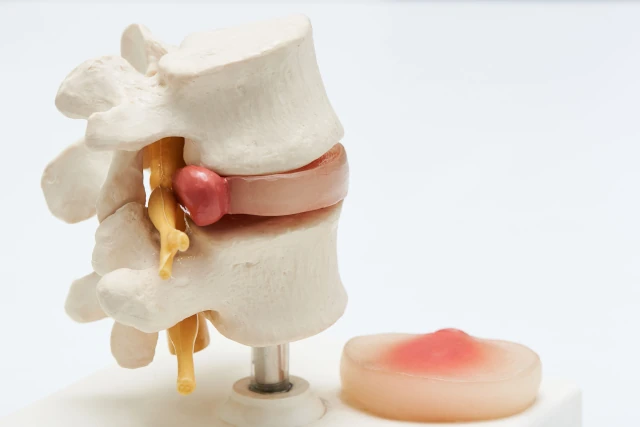
Bulging disc and herniated disc are related but not identical spinal conditions. Both can cause neck or back pain, but symptom severity, nerve involvement, and treatment needs may differ. This guide explains key differences, red flags, diagnosis, and conservative recovery strategies.
Bulging Disc vs Herniated Disc: Clear Difference
- Bulging disc: Disc contour extends outward without full annular rupture.
- Herniated disc: Outer layer tears and inner material protrudes, increasing nerve compression risk.
Common Symptoms
Bulging Disc Symptoms
- Dull back or neck ache
- Movement stiffness
- Mild referred discomfort
Herniated Disc Symptoms
- Sharp radiating pain (arm or leg)
- Tingling, numbness, or weakness
- Pain with coughing, sneezing, or prolonged sitting
Common Causes and Risk Factors
- Disc degeneration with age
- Repeated flexion with high load
- Poor lifting mechanics
- Long sedentary periods with weak trunk support
- Smoking and reduced tissue recovery capacity
How Diagnosis Is Made
- Clinical history and neurological examination
- Movement tests for directional sensitivity
- MRI when severe, persistent, or progressive deficits occur
Conservative Treatment Plan
- Symptom-guided activity modification, not total bed rest
- Spine-friendly mobility and walking progression
- Core and hip strengthening with graded loading
- Posture and lifting retraining
- Pain-management support when prescribed
Useful Exercises (When Clinically Appropriate)
- McKenzie-style extension progression
- Pelvic tilts and controlled trunk stabilization
- Bird-dog and dead bug progressions
- Neural mobility drills for radiating symptoms
Red Flags Requiring Urgent Care
- New bladder or bowel dysfunction
- Rapidly progressive leg or arm weakness
- Saddle-region numbness
- Severe unrelenting pain with systemic symptoms
When Surgery Is Considered
Surgery may be considered in selected cases with persistent disabling radiculopathy, progressive neurological deficit, or red-flag compression syndromes when conservative care is insufficient.
Need a Personalized Recovery Plan?
Every condition responds differently to treatment. For better outcomes, combine self-care with expert guidance, structured progression, and regular review. Explore our physiotherapy services, see how our treatment process works, or read more evidence-based guides in our blog library.