This spinal pain guide is designed to help you understand symptoms, treatment options, and practical physiotherapy steps to improve recovery outcomes.
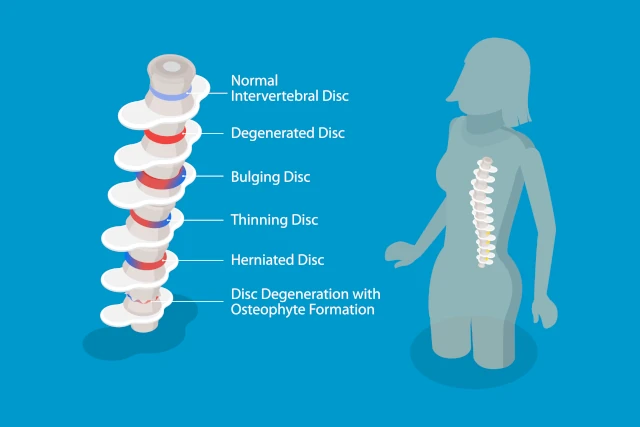
Spinal disc disorders are major contributors to neck pain, back pain, sciatica, and mobility limitation. Accurate diagnosis and staged rehabilitation are essential because each disc pattern behaves differently under load.
This complete guide covers common disc pathologies, red flags, imaging choices, evidence-based treatment, and physiotherapy-led recovery planning for safer long-term outcomes.
Major Types of Spinal Disc Problems
- Bulging disc
- Protrusion and extrusion patterns
- Herniated disc with radicular symptoms
- Sequestered disc fragment
- Annular tear
- Degenerative disc disease
- Disc-related stenosis changes
Symptoms and Clinical Patterns
- Localized neck or low-back pain
- Radiating arm or leg pain
- Tingling, numbness, or weakness
- Pain with sitting, bending, or prolonged load
- Movement limitation and protective stiffness
Red Flags Requiring Urgent Evaluation
- Bladder or bowel control changes
- Groin numbness or saddle anesthesia
- Rapid progressive weakness or foot drop
- Severe unrelenting night pain with systemic signs
MRI vs X-Ray: Which Test Is Better?
MRI is preferred for disc and nerve soft tissue detail. X-ray is useful for bony alignment, instability clues, and degenerative changes. Test choice depends on clinical findings and red-flag screening.
Treatment Options
Non-Surgical Management
- Physiotherapy and progressive exercise
- Load management and activity modification
- Medication support where prescribed
- Injections in selected persistent radicular cases
Surgical Indications
- Progressive neurological loss
- Cauda equina features
- Severe persistent pain unresponsive to conservative care
Physiotherapy Rehabilitation by Phase
Phase 1: Symptom Control
- Reduce provocative loading patterns
- Restore comfortable movement windows
- Use directional preference where clinically relevant
Phase 2: Stability and Mobility
- Core stabilization and spinal control drills
- Nerve mobility exercises in radicular presentations
- Hip-thoracic mobility restoration
Phase 3: Functional Capacity
- Progressive resistance and endurance loading
- Task-specific movement retraining
- Return-to-work and return-to-sport planning
Condition-Specific Exercise Examples
Lumbar Disc Irritation
- Pelvic tilts and dead bug progression
- Bird-dog and anti-rotation work
- Walking and graded hinge training
Cervical Disc Irritation
- Chin tucks and deep neck flexor activation
- Scapular retraction and thoracic extension
- Controlled cervical mobility drills
Prevention and Recurrence Control
- Progress load gradually after pain settles
- Use movement breaks in prolonged sitting jobs
- Strengthen trunk and hip support muscles
- Maintain regular aerobic conditioning
- Use safe lifting mechanics consistently
Frequently Asked Questions
Can a bulging disc heal without surgery?
Yes. Most cases improve with structured conservative treatment and guided physiotherapy progression.
How long does disc recovery usually take?
Mild cases can improve in weeks, while chronic or severe nerve-related cases may require several months.
4-Phase Disc Recovery Framework
Phase 1: Irritation Control
- Reduce aggravating postures and repeated spinal loading
- Use pain-calibrated movement instead of strict bed rest
- Restore symptom-friendly movement direction
Phase 2: Mobility and Control
- Improve hip-thoracic mobility and trunk control
- Start low-load anti-rotation and stabilization drills
Phase 3: Strength and Endurance
- Build tolerance for bending, lifting, and prolonged sitting
- Progress resistance training with form monitoring
Phase 4: Return to Full Function
- Task-specific reconditioning for work and sport demands
- Relapse-prevention planning and long-term maintenance
Progress Tracking Checklist
- Pain intensity and frequency trend each week
- Walking/sitting tolerance in minutes
- Neurological symptoms: numbness, weakness, radiating pain
- Exercise adherence percentage
- Function milestones: sleep, work, and daily task capacity
Need a Personalized Recovery Plan?
Every condition responds differently to treatment. For better outcomes, combine self-care with expert guidance, structured progression, and regular review. Explore our physiotherapy services, see how our treatment process works, or read more evidence-based guides in our blog library.